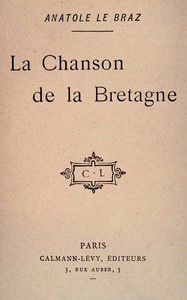
"La chanson de la Bretagne" by Anatole Le Braz is a collection of lyric poetry written in the late 19th century. Rooted in Breton folk voice, it sings of the land and sea, saints and legends, and the daily labor of a maritime people. The poems weave love, loss, faith, and exile into vivid ballads and laments that preserve a vanishing regional soul. Readers drawn to Celtic myth, seafaring life, and elegiac regionalism will find it richly atmospheric.
The opening of the collection presents the poet as a vessel for Brittany’s fading spirit, vowing to voice its “last dreams,” then unfolds a suite of lyrics that map coasts and moors, from seaweed-gatherers and Bigouden girls to fishermen of Paimpol, beggars, and washerwomen, with quiet town-portraits of Tréguier and Quimperlé. Legends and devotions intermingle—Brocéliande’s enchanted spring, the drowned city of Ker-Is and Ahès, and Saint Yves—while winds, rocks, and seas are personified. Seasonal pages (Noël, May, Pâques) braid Christian ritual with pagan echoes, and recurrent themes of shipwreck, exile, and yearning surface in ballads of doomed love, notably Jeanne Larvor and Jeanne Lezveur. The section closes in a tender, mournful key, conscious of the disappearing oral songs and the half-remembered lullaby of the poet’s mother. (This is an automatically generated summary.)